
Planning for Success: Small and rural School districts
Not every school project follows the same playbook.
In small and rural school districts, even familiar design challenges can come with a different set of considerations. Limited funding, varying jurisdictional requirements, and strong community involvement might all influence how a project takes shape. Knowing what to expect makes a difference. With experience working in these districts, our team helps architects and GCs foresee possible roadblocks and find practical solutions that keep projects moving and maximize each investment.
Making Every Dollar Count
When a major capital investment may take decades to materialize, every decision matters.
For smaller school districts, major capital investments can be few and far between, making it essential to stretch limited budgets without sacrificing quality or long-term performance. Creative engineering solutions can help districts meet critical needs while maximizing the value of available funding.
At Franklin Elementary in Port Angeles, challenging grades, accessibility requirements, and drainage to two separate basins presented an opportunity to reduce costs through innovative problem-solving. Rather than installing separate stormwater systems, our team worked with the City of Port Angeles to develop a solution that directs drainage to a single basin, eliminating redundant infrastructure.
We further coordinated with the city to phase stormwater installation around the occupied campus. The full system was included in the permit, but construction could proceed in stages to accommodate the school’s operations. This approach met regulatory requirements while balancing the district’s budget and construction schedule with minimal disruption to students and staff.
Designing with the Community in Mind
Schools serve more than students.
In smaller communities, a new school is more than a place to learn. It represents significant public investment and frequently functions as a gathering place for the broader community for events, emergency preparedness, and staging facilities. Residents have a personal stake in these projects. Understanding their priorities and communicating the reasoning behind design decisions helps build trust and create facilities that reflect what the community truly values.
Working closely with the district and City of Orting, we make complex engineering decisions more accessible to the people invested in the project. Explaining considerations such as seismic performance, challenging soil conditions, and floodplain requirements in straightforward terms helps the district understand their options and communicate effectively with residents. For architects and GCs, this means working with an informed owner, fewer uncertainties, and a team aligned on the project’s goals.
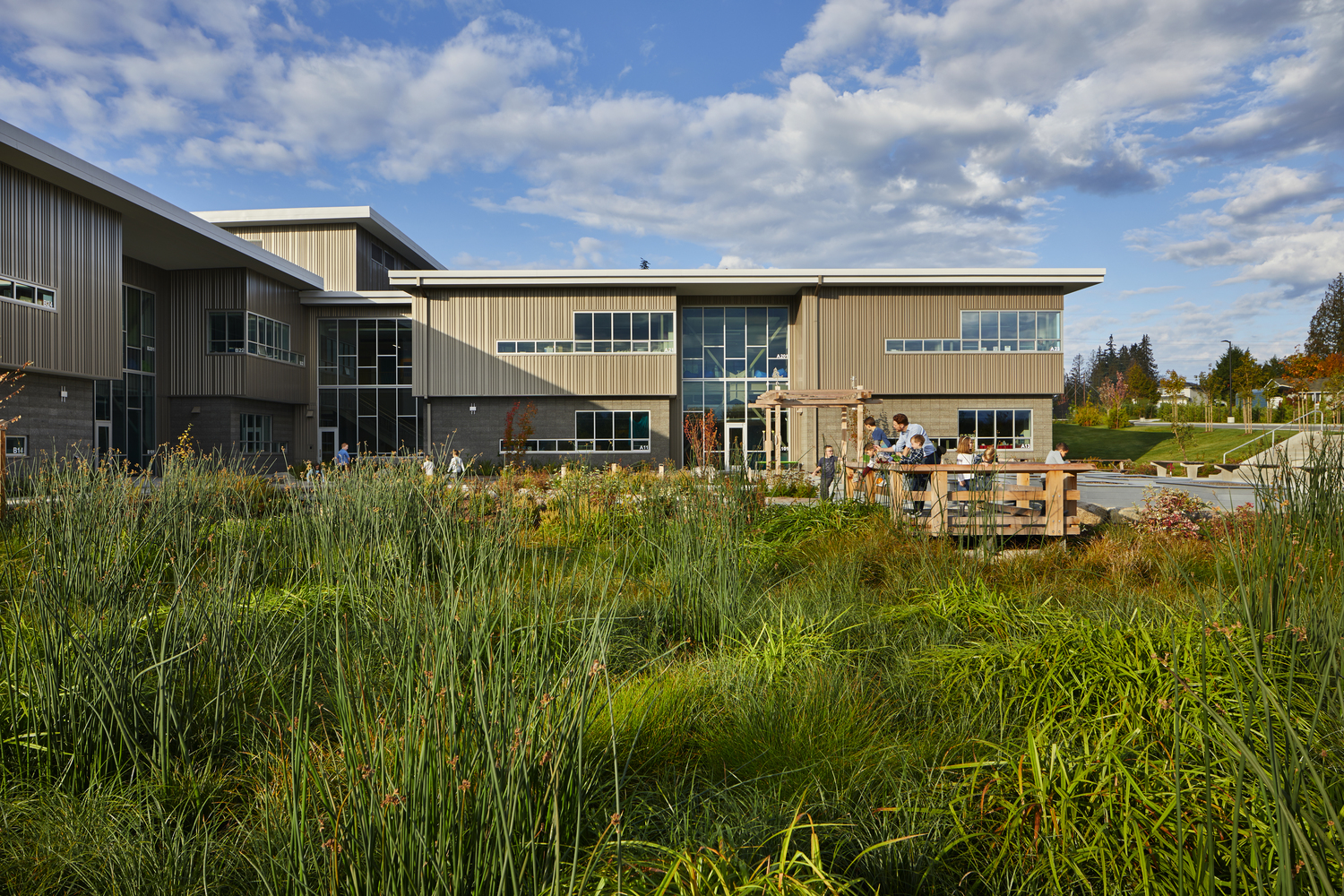
Equally important is creating a school the community can take pride in. Orting Elementary pairs an efficient steel-framed structure with mass timber elements in public spaces, bringing the warmth and natural character of wood into the design. The result balances structural efficiency with thoughtful, sustainable design, creating a school that serves the district’s needs while giving the community something to take pride in. The addition of a synthetic field extended the project’s benefits beyond the school day, providing space for middle school athletics and public events.
Planning for the Future
Designing for what comes next.
The timing of future capital improvements may be uncertain, so today’s design decisions must balance current programming requirements while anticipating future needs. Resilient, adaptable facilities give districts flexibility as educational programs and technology change. Planning now for expansion and infrastructure can prevent costly modifications and give future architects and GCs a stronger foundation.
We look beyond the current scope to consider how current decisions can support future improvements, from preserving opportunities for expansion to accommodating additional infrastructure. The goal is to position the district for success whenever its next major investment becomes possible.
At Orting School District, that approach is guiding infrastructure placement and site layout for proposed phased campus improvements at the existing high school. Planning how future projects will connect with existing facilities helps reduce disruption and avoid unnecessary rework. Each phase can build on the last, protecting the district’s investment while making future design and construction more efficient.
A Better Process from the Start
Small and rural school projects present unique challenges, but the right experience can make all the difference.
Planning a project in a small or rural school district? Bring us into the conversation early. Together, we can find practical solutions that deliver lasting value for the communities you serve.